Empowering Survivors to become Advocates: SASANE’s Impact on Access to Justice

Legal justice is the foundation of any fair society, guaranteeing that everyone receives equal treatment under the law. It highlights the importance of upholding the rule of law, according to which nobody is above the laws that govern us all. It ensures that every person, regardless of socioeconomic background, is protected by the law. However, the essence of this idea is jeopardized when people, especially the survivors of different types of violence such as sexual abuse and exploitation, trafficking, gender based violence, are unable to access the legal system or are ignorant of their rights.

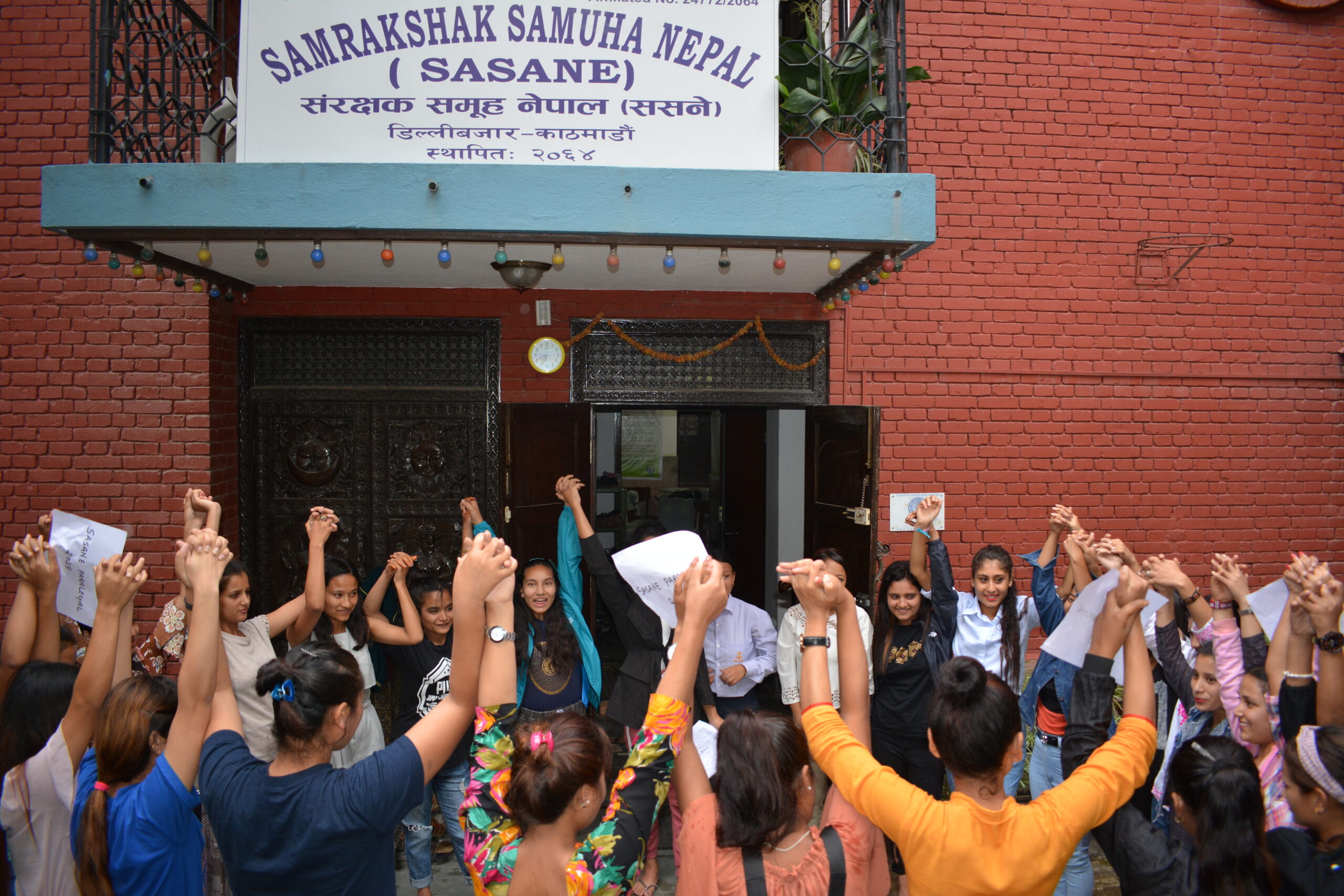
In order to address these issues, civil society is essential in becoming the voice of the voiceless. Samrakshak Samuha Nepal (SASANE) plays a crucial role in addressing these issues by standing up for the rights of vulnerable girls and facilitating their access to justice. SASANE empowers girls facing difficulty, providing them with the support and resources needed to navigate the legal system and assert their rights.

Numerous obstacles hinder the reporting of such cases of violence and exploitation, thus further hampering their access to justice. Lack of awareness about law and legal procedures among victims and their families, social stigma, fear of retaliation from perpetrators, disbelief towards judicial system and logistical difficulties in accessing police stations are some of the major challenges in reporting such cases. In spite of these challenges, SASANE works towards justice and equality for all, acting as a beacon of hope.

In November 2023, SASANE conducted an impact assessment to evaluate the effectiveness of its programs. Through an innovative strategy to access to justice, SASANE has been empowering survivor girls to become advocate for change in their own lives as well as their communities. SASANE provides them paralegal training where they acquire skills and information necessary to handle complex legal procedures. These paralegals use their training to assist others, especially girls who have been victims of trafficking, experienced GBV or survived exploitation. They offer support at police stations, assisting victim girls write free applications, provide emotional support and encourage them, and provide legal guidance.

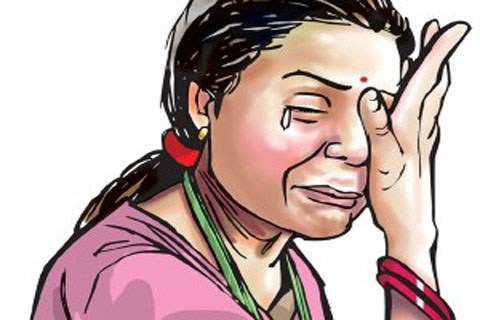
A survivor-turned-paralegal, shares her story of how she fell into the trap of a seemingly promising good education by her neighbor and came to Kathmandu. Unfortunately, she was physically as well as sexually abused in the city instead of getting a good education. However, with the help of her friend and SASANE, she found the strength to pursue legal justice. SASANE not only helped her in lodging a complaint with the police but also accompanied her to medical appointments, provided psychosocial counseling and encouraged her to fight for her rights and seek justice.

Similarly, another survivor recounts a similar experience. She shares how financial dispute between her parents led her to secretly go to the city and work. However, she was sexually abused and exploited at the hotel where she was employed. Despite these hardships, with the support from SASANE, the culprit was punished and she was able to get justice. At present, she is studying law with the SASANE’s assistance.

These are just a few example representing a larger group of individuals. SASANE not only assist survivors in obtaining legal justice, but also educates, empowers, provide psychosocial counseling and offer safe house or accommodation. Through the program School for Justice, SASANE provides education to survivors of Commercial Sexual Exploitation who are under 18 years old. Out of the 20 adolescent girls enrolled, four have gained law degree, and one has completed a master’s degree, while the rest are pursuing high school or bachelor’s degree.

Besides aiding individual survivors, SASANE fosters a broader movement towards empowerment and justice, transforming victims into advocates who can inspire and support others going through similar challenges. The empowered and educated girls emerge as powerful advocates against CSE and be a change maker in the society.
From Vulnerability to Empowerment: Safeguarding Rural Girls in Kathmandu against Trafficking and Exploitation

Young and adolescent girls from rural villages enter city in search of employment, quality education, and improved living standard. However, surviving in the city among unknown faces and without social support is easier said than done. Such girls are highly at risk of being trafficked or ending up in doubtful entertainment businesses such as dance bars, restaurants, massage parlors and beauty parlors, where they are either lured or coerced into sexual activities such as abuse, commercial sexual exploitation, or prostitution. Traffickers have a keen eye for such vulnerable individuals and tempt them with promises of good food, housing, quality education, secure jobs, and more.

Despite the seriousness of this issue, the exact number of these girls in this business is indefinable. Nevertheless, research by various organizations estimates that around 13,000 adolescent girls are employed in these sectors in Kathmandu Valley. Of these, 33 percent are under the age of 17, while the remaining 67 percent are between 18 and 23 years old. The study shows that girls below the age of 23 mostly end up in such places. Having said so, we cannot overlook the fact that in-depth research has not been done in the country yet. Therefore, the actual numbers and situation of these vulnerable girls are likely even more frightening than that previous reports have indicated.

With the transition to federalism in Nepal, local government now have increased authority to address and resolve local issues in accordance with the law. In this case, it is an imperative responsibility of the local government to identify the numbers of young girls working in such places and protect them by creating opportunities such as providing capacity development and generating employment.

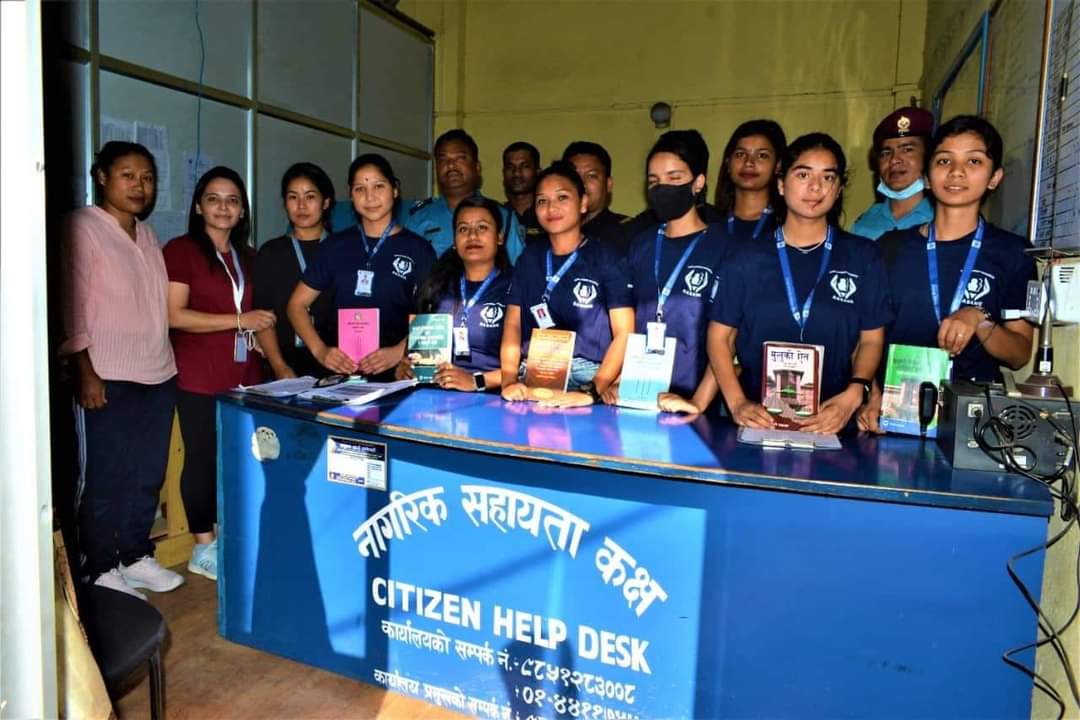
In response to this, Samrakshak Samuha Nepal (SASANE) organized a meeting with ward committee members of Kathmandu Metropolitan City – 29 and Social Development Department to address these above mentioned issues and develop a sustainable solution to provide them with better opportunities and protection against exploitation.

Now that Kathmandu Metropolitan City has developed Human trafficking and Transportation Control Procedure, 2078 and started implementation in all the wards of Kathmandu, it is important to gather precise data to effectively implement the procedure and provide support to the needy ones. As per clauses 6 and 8 of the control procedure, 2078, the metropolitan committee and ward committee are responsible to identify the data and situation of vulnerable individuals, along with rehabilitating and protecting them. However, in order to do so, it is essential to conduct a thorough research in each ward of Kathmandu, rather than depending on the outdated and estimated statistics done previously by organizations.

Having up-to-date ward-wise data gathered through proper research can guide committees in effectively implementing the control procedure and enable them to address the specific needs and conditions of vulnerable individuals in each ward. This will lead to more efficient rehabilitation and protection efforts. During the discussion, SASANE pointed out that the lack of accurate data has caused ward committee to become inactive, resulting in the ineffectiveness of the 2078 control procedure. Therefore, a separate, comprehensive research is essential for ensuring effective implementation of the procedure.


Ignored Victims: Survivors of Commercial Sexual Exploitation (CSE) Struggle for Justice

The issues of Commercial Sexual Exploitation (CSE) requires a comprehensive understanding of the legal frameworks and policies in Nepal as well as around the world. However, the absence of a clear and precise definition of CSE in Nepal has posed a significant challenge for law enforcement, legal professionals and social organizations.

The lack of clarity in defining CSE has created challenges in filing cases and ensuring justice to the victims of such exploitation. Legal proceedings are complicated by the fact that CSE does not precisely fit within the definitions of rape or sexual abuse. For instance, although the case is of long-term sexual exploitation, the FIRs are often filed under rape and the culprit is penalized as per the rape law, which does not morally provide justice to the victim. Due to the ambiguous definition and law, Nepali girls in rural areas who have fallen victims of CSE are particularly affected as they struggle to seek legal solution.

Research and cases examined by Samrakshak Samuha Nepal (SASANE) reveal that adolescent girls from financially disadvantaged families, residing in rural areas and illiterate or school drop-out are most likely the victims of CSE. Furthermore, individuals who migrate to city from rural communities for employment opportunities but lack social support networks or stable living arrangements often fall in the pitfall of CSE. This highlights the intersection of socioeconomic factors and vulnerability to exploitation, emphasizing the need for targeted intervention and support mechanism to protect vulnerable populations from exploitation and abuse.

Commercial Sexual Exploitation is a grave crime and because of the complex nature of CSE, which includes a various forms of exploitation such as child exploitation, prostitution, forced labor and trafficking, it requires a clear well-defined legal framework to effectively tackle the issue. However, government currently lacks a comprehensive and specific law addressing such exploitation. In response, SASANE submitted a proposal urging the formulation of legislation specifically targeting CSE.

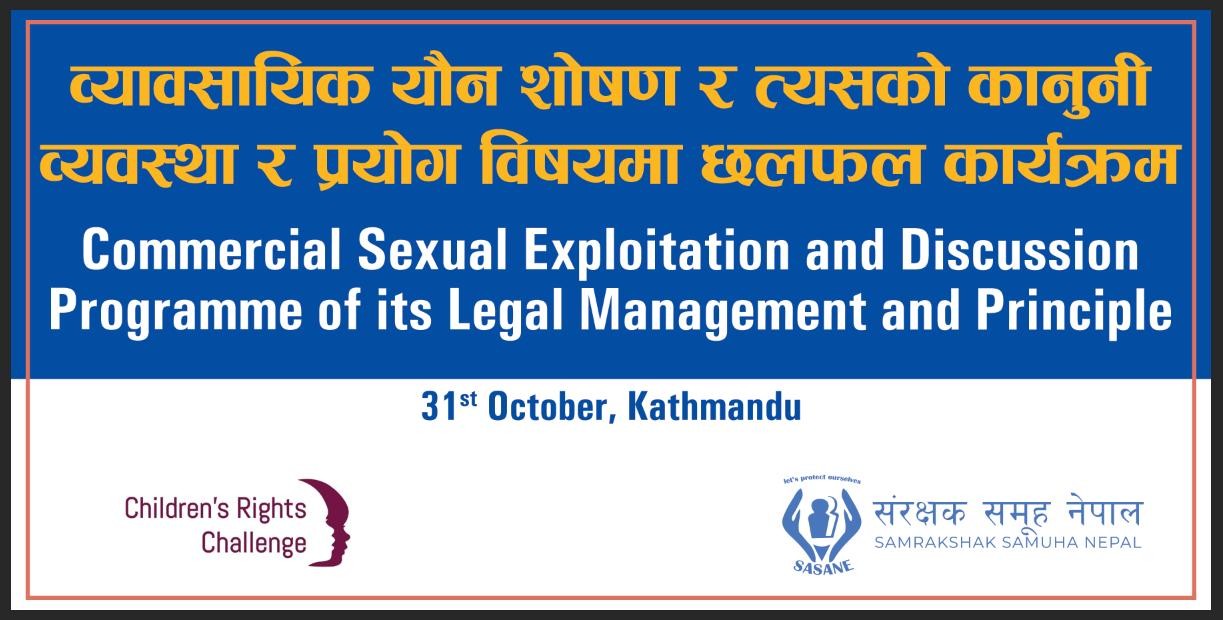
In the same vein, a discussion was held recently between officials from Nepal Police, representatives from the District Attorney’s office, as well as the Appellate, Supreme Court, and Nepal Bar Association lawyers, along with the members of SASANE. The discussion stressed on the urgent requirement for a clear definition of CSE and the formulation of robust policies to address this issue effectively.

One of the major objectives of the discussion was to identify gaps in the existing legal provisions and explore effective litigation that addresses the challenges faced by victims of CSE and tackles this crime effectively. SASANE highlighted this issue in the Supreme Court after the discussion. As a result, a significant milestone was the formal filing of a writ in the Supreme Court on November 8, 2023. The writ was registered against Government of Nepal including Office of the Prime Minister and Council of Ministers, Ministry of Federal Affairs and General Administration, Ministry of Home Affairs and Ministry of Law, Justice and Parliamentary Affairs. The case, is in show cause notice period at the moment, which was issued by the judge on December 14, 2023.

In this ongoing effort, SASANE has been doing further research and collecting supporting cases and documents for the issue.

Some facts regarding Gender Based Violence 2023

  • Women and girls in Nepal face multiple burdens of violence – physical, sexual, emotional, and structural with digital (Social Media).
  • Women also face discrimination and suffer stigma, shame, and social isolation if they seek care and support for the violence they suffer.
  • 61 percent of Nepalese women victims forced to hide their problem of violence
  • The highest percentage of women and girls experiencing GBV was in the 19-25 age group at 28.31 percent, followed by 14.24 percent in the 26-35 age group.
  • Rapes and sexual exploitation are alarmingly on the rise. Nepalese women and girls from 11 to 25 years old are at high risk of trafficking.
  • Traffickers continue to target young, uneducated individuals from traditionally marginalized castes and ethnic minority communities with limited economic opportunities, and then lure victims with promises of work or education.
  • Observers report GBV, caste-based discrimination, child sexual abuse, and the absence of economic opportunities increase the vulnerability of many Nepalese, particularly women and girls, to trafficking.
  • Traffickers target unregistered migrant workers, including the large number of young Nepalese women who transit India, or men and women who rely on unregistered recruitment agents.
  • Traffickers reportedly take advantage of more relaxed pre-departure screenings at Kolkata and Chennai airports, or bribe Indian officials in New Delhi and Mumbai, to fly Nepalese migrant workers to third countries without proper documentation, which increases the workers’ vulnerability to trafficking.


Annual Review Meeting – 2024

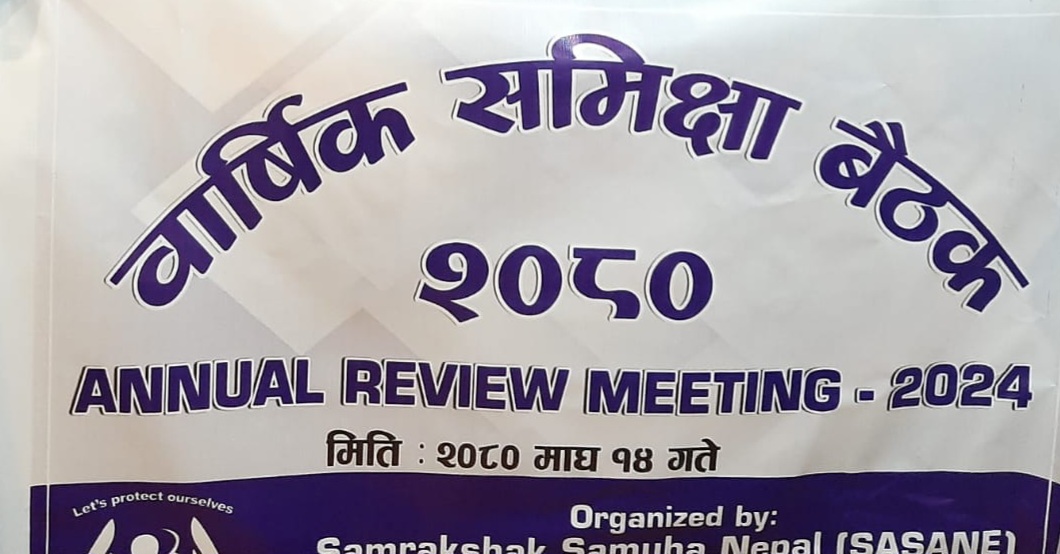
Samrakshak Samuha Nepal (SASANE), held its annual review meeting for the year 2023 on January 28, 2024, Sunday. The purpose was to evaluate the progress made in 2023, gauge the project’s success in meeting its objectives, and pinpoint areas for enhancement.

The structured agenda of the meeting covered a thorough examination of the project plan and goals, an appraisal of the team’s performance, an assessment of the project’s impact on stakeholders, and a discussion on encountered challenges. Our Organization addressed issues with some of the project targets which we have planned to prioritize support for trafficked women aiming to address issues such as commercial sexual exploitation.

This highlights the challenges faced, including the complexities surrounding citizenship rights for women and girls who have been sexually exploited or trafficked. Without proper documentation, such as birth certificates and parental identification, these individuals are often denied access to necessities and opportunities. To address this issue, initiated legal actions have been taken to advocate for policy improvements that prioritize granting citizenship to those in need from our organization.

During the meeting, updates were provided by the SASANE team members regarding the project’s status, highlighting achievements, milestones, setbacks, and delays with relevant data and metrics showcasing the project’s effectiveness. Stakeholders present at the meeting shared their feedback on the project’s performance, offering suggestions for improvement and outlining their expectations for the upcoming year, along with guidance on achieving those objectives. It is provided to celebrate the organization’s successes and acknowledge the hard work and dedication of the SASANE team.

In essence, while our organization remains dedicated to empowering women and girls, we acknowledge the complexities and obstacles inherent in our endeavors. There is a necessity to discover potential resolutions for the challenges encountered during the implementation of activities and programs that we set up to achieve the target. Through ongoing reflection and proactive measures, strived to adapt and improve our approaches to better serve our beneficiaries and achieve our mission of fostering sustainable opportunities and advocating for justice and equality.

The annual review meeting served as an opportunity to assess progress, identify areas for enhancement, and make necessary adjustments to the project plan or team structure. Additionally, it provided a platform to celebrate organizational achievements and recognize the efforts of the SASANE team.

#

Call Us Now:

+977-01-4547055
#

Address:

Gattekulo, Kathmandu, Nepal